Despite billions in annual spending on health IT, interoperability remains elusive, security breaches continue at record rates, and legacy systems consume budgets that should fund innovation. This article examines the seven most common healthcare IT challenges we see across 50+ healthcare technology implementations — not as theoretical problems, but as practical obstacles that delay projects, increase costs, and frustrate clinical users.
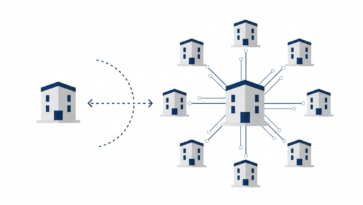
Healthcare Implementations
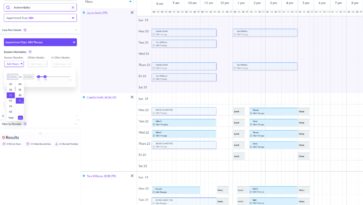
Platform Users Scaled
Compliant Architecture
Client Value Created
Last updated: February 2026
By: Kevin Yamazaki, Partner, CEO at Sidebench
In this article:
 1. What Are the Biggest Interoperability Challenges in Healthcare IT?
Healthcare interoperability remains the industry’s most persistent technology challenge. Despite roughly 96% EHR adoption among non-federal acute care hospitals (ONC 2024), most organisations still struggle to exchange data with external systems effectively. The root cause: fragmented standards, proprietary data formats, and vendor lock-in.
Why Interoperability Fails
The problem isn’t technical capability — FHIR APIs exist, HL7 standards are documented. The problem is incentive alignment. EHR vendors benefit from switching costs. Hospitals benefit from keeping patients in-network. No single party has sufficient incentive to solve interoperability for the whole system.
What Actually Works
- Care coordination across a defined network (everyone benefits from reduced readmissions)
- Patient access to their own records (regulatory mandate via Information Blocking rules)
- Payer-provider data exchange for value-based contracts (shared financial incentive)
 2. How Does Data Security Threaten Healthcare Technology?
Healthcare data breaches cost $9.77 million per incident on average — over 2x the global average across industries (IBM/Ponemon Cost of a Data Breach Report 2024). Healthcare is uniquely vulnerable: PHI has permanent value, regulatory penalties add to breach costs, and clinical operations cannot tolerate extended downtime.
Where the Attacks Are Coming From
Healthcare ransomware attacks surged in 2023. According to Emsisoft, 46 hospital systems suffered ransomware attacks that year — up from 25 in 2022 — with at least 141 hospitals directly affected. Over 136 million patient records were breached in 2023 alone, the highest ever recorded (HHS OCR).
What Actually Works
- Zero-trust architecture: Assume breach, verify every access request
- Multi-factor authentication: Required for all PHI access
- Endpoint detection: Real-time monitoring for anomalous behavior
- Regular penetration testing: Find vulnerabilities before attackers do
- Incident response planning: Practice quarterly, update annually
 3. What Are the Hidden Costs of Outdated Healthcare Technology?
Outdated healthcare technology costs US health systems an estimated $8.3 billion annually through communication inefficiencies alone, with doctors and nurses wasting an average of 45 minutes a day dealing with clunky or unavailable IT systems (Ponemon Institute / Becker’s Hospital Review, 2013). Legacy systems running on end-of-life software cannot receive security patches, creating HIPAA compliance exposure.
The Legacy Trap
- Maintenance: Specialised skills become rarer and more expensive
- Integration: Every new system requires custom connectors
- Security: Unpatched vulnerabilities accumulate
- Opportunity: Modern capabilities remain inaccessible
- Talent: Good engineers don’t want to work on COBOL
What Actually Works
- Wrap: Create API layers around legacy systems so they can talk to modern platforms
- Extend: Build new capabilities on modern platforms that connect to wrapped legacy
- Replace: Migrate core functions to modern platforms as resources allow
- Retire: Sunset legacy systems once migration is complete
 4. Why Is Healthcare IT Compliance So Difficult?
HIPAA, HITECH, FDA (for clinical software), state privacy laws, and payer requirements create a complex regulatory environment. Compliance isn’t a one-time achievement but an ongoing operational requirement — requiring continuous monitoring, regular risk assessments, and documented policies that actually reflect practice.
What Actually Works
- Architecture decisions: Build encryption, access controls, and audit logging into system foundations
- Automated monitoring: Continuous compliance verification rather than periodic audits
- Policy alignment: Documented policies that reflect actual operational practice
- Training integration: Compliance training as part of onboarding and workflow, not annual checkbox
5. How Do Healthcare Organisations Handle System Integration Challenges?
Healthcare technology stacks include 50+ systems on average — EHRs, practice management, revenue cycle, imaging, lab, pharmacy, and dozens of point solutions. Integrating these systems costs $50K-$300K per integration, delays projects by months, and creates ongoing maintenance burdens.
Why Integration Is Hard
EHR vendors control integration interfaces. Epic’s App Orchard and Cerner’s Open APIs exist, but vendor support for custom integrations varies. HL7 v2 messages remain the dominant integration method despite FHIR’s promise.
What Actually Works
- Integration platform: Centralised middleware (Mirth, Rhapsody) to manage connections
- Standards-first: FHIR where possible, HL7 v2 where necessary
- Vendor relationships: Early engagement with EHR vendors on integration scope
- Phased rollout: Prove core integrations before expanding scope
- Monitoring: Real-time visibility into integration health
6. What Workforce Challenges Does Healthcare IT Create?
Healthcare IT leadership turns over frequently — many CIOs stay fewer than three years. Below the C-suite, the talent shortage is acute: CHIME’s annual surveys consistently identify workforce challenges as a top concern for healthcare IT leaders. The competition for HIPAA-experienced engineers and clinical informaticists is fierce.
The Skills Gap
Healthcare IT requires a rare combination: technical depth (software engineering, cloud infrastructure, data analytics) plus domain knowledge (clinical workflows, regulatory requirements, payer operations). Most engineers have one or the other; few have both.
What Actually Works
- Partner strategically: Supplement internal teams with specialised healthcare IT partners
- Invest in training: Develop domain knowledge in technical hires
- Modernise stacks: Attract talent by working with current technologies
- Remote options: Expand talent pool beyond local geography
- Career paths: Create advancement opportunities that retain institutional knowledge
7. How Does Scaling Healthcare Technology Across Locations Fail?
Multi-site healthcare organisations face multiplied complexity: different EHR configurations per site, inconsistent workflows, varying state regulations, and local IT staff with limited enterprise visibility. Technology that works at one clinic may fail at fifteen.
The Scaling Challenge
Cortica grew from 1 clinic to 16, each with unique scheduling demands, provider availability, and patient populations. A scheduling system designed for one location couldn’t accommodate this variation — wait times ballooned to 6 months.
Comparison Tables
Healthcare IT Challenges — Impact & Solution Approach
| Challenge | Industry Cost | Solution |
|---|---|---|
| Interoperability | Billions in duplicate testing | FHIR APIs, middleware |
| Cybersecurity | $9.77M per breach | Zero-trust architecture |
| Legacy systems | $8.3B in inefficiencies | Phased migration, API wrappers |
| Compliance | Fines up to $2M/incident | Compliance-by-design |
| Workforce | $90K+ per unfilled role | Strategic partnerships |
| Integration | $50K-$300K per integration | Standard APIs, microservices |
| Scaling | Multiplier on all above | Platform approach |
EHR Interoperability Standards Comparison
| Standard | Purpose | Adoption | Limitation |
|---|---|---|---|
| HL7 v2 | Message-based exchange | Widespread (legacy) | Inconsistent implementation |
| HL7 FHIR | RESTful API exchange | Growing rapidly | Still evolving |
| DICOM | Medical imaging | Universal in imaging | Limited to imaging data |
| C-CDA | Clinical documents | Moderate | Not real-time |
| SMART on FHIR | App platform for EHRs | Emerging | Requires FHIR infrastructure |
FAQ
What are the main challenges of healthcare IT?
The main challenges are system interoperability, cybersecurity threats ($9.77M average breach cost), legacy system maintenance, HIPAA compliance complexity, workforce shortages in health IT, integration costs for new systems, and scaling technology across multiple locations.
Why is interoperability a problem in healthcare?
Providers use different EHR systems with proprietary data formats, HL7 and FHIR standards are implemented inconsistently, and there’s no financial incentive for vendors to open up data exchange. Patient records stay siloed, and duplicate testing wastes billions.
How much do healthcare data breaches cost?
Healthcare data breaches cost $9.77 million per incident on average — over 2x the global average (IBM/Ponemon 2024). Costs include regulatory fines, legal settlements, breach notification, credit monitoring, IT forensics, and reputational damage.
What is legacy system risk in healthcare?
Legacy system risk is the operational, security, and financial exposure from running outdated technology. End-of-life software can’t receive security patches, can’t integrate with modern platforms, and requires increasingly expensive specialised maintenance.
How do hospitals handle HIPAA compliance for technology?
HIPAA technology compliance requires technical safeguards (encryption, access controls, audit logging), administrative safeguards (risk assessments, training, incident response), and physical safeguards (device security, facility access). Compliance is ongoing.
What is the cost of implementing healthcare technology?
Costs vary: EHR systems ($15K-$70K per physician), telehealth ($50K-$200K), custom applications ($150K-$1M+), integration middleware ($50K-$300K). Total ownership includes licensing, implementation, training, support, and ongoing compliance monitoring.
Why do healthcare IT projects fail?
Common causes: inadequate clinician involvement in requirements, underestimated integration complexity, insufficient change management, scope creep, choosing technology before defining workflows, and failure to account for HIPAA/FDA requirements during architecture decisions.
How can healthcare organisations improve IT security?
Implement multi-factor authentication for all PHI systems, regular penetration testing, zero-trust architecture, endpoint detection, automated patching, phishing training, quarterly incident response testing, and vendor security assessments.
What is the role of AI in solving healthcare IT challenges?
AI improves interoperability through data format translation, detects cybersecurity threats in real-time, optimises capacity planning, and reduces clinician burnout via ambient documentation. AI is a tool, not a solution — implementation still requires proper architecture.
How do you choose a healthcare technology partner?
Key criteria: demonstrated HIPAA compliance experience, healthcare case studies with measurable outcomes, understanding of clinical workflows, EHR integration capability, long-term support, and a development approach involving clinicians in requirements and testing.
Sidebench Perspective
Healthcare IT challenges aren’t primarily technical problems — they’re organisational and incentive problems that manifest as technical symptoms. Interoperability fails because no one profits from solving it. Security breaches happen because security competes with convenience — and data security challenges begin with HIPAA application layer compliance, not just hosting. Interoperability gaps are especially acute in behavioral health EHR integrations due to 42 CFR Part 2 requirements. The best technology partners help you see these dynamics clearly, not just implement whatever you ask for.
Facing These Challenges?
Sidebench has delivered 50+ healthcare technology implementations across health systems, payers, and digital health companies. If you’re evaluating partners, here’s our 15-criteria framework for choosing a healthcare technology partner.
Cited Data Sources
- ONC EHR Adoption Data — ONC: National Trends in Hospital and Physician EHR Adoption
- IBM/Ponemon Cost of a Data Breach 2024 — IBM: Cost of a Data Breach Report 2024
- Healthcare Ransomware 2023 (Emsisoft) — Emsisoft: At Least 141 Hospitals Directly Affected
- HHS OCR Breach Data — HHS: Breach Portal
- Legacy Technology Costs ($8.3B) — Ponemon Institute study cited by Becker’s Hospital Review
- ONC Information Blocking Rules — HealthIT.gov: Information Blocking
- IEHP Case Study (1K to 90K users) — Sidebench approved proof point
- PCIHIPAA Case Study (89% automation) — Sidebench approved proof point
- Cortica/AXON Case Study (6mo to 30 days) — Sidebench approved proof point
About the Author
Kevin Yamazaki is Partner and CEO at Sidebench, a Los Angeles-based digital transformation consultancy and product studio. He has led healthcare technology implementations for organisations including Children’s Hospital Los Angeles, IEHP, Hoag, and Cortica, spanning HIPAA-compliant architecture, EHR integrations, and healthcare platform development. Under his leadership, Sidebench has delivered 50+ healthcare implementations, including platforms handling over 1 million patient appointments annually.